


Blue & Yellow Macaw Fine Art Print
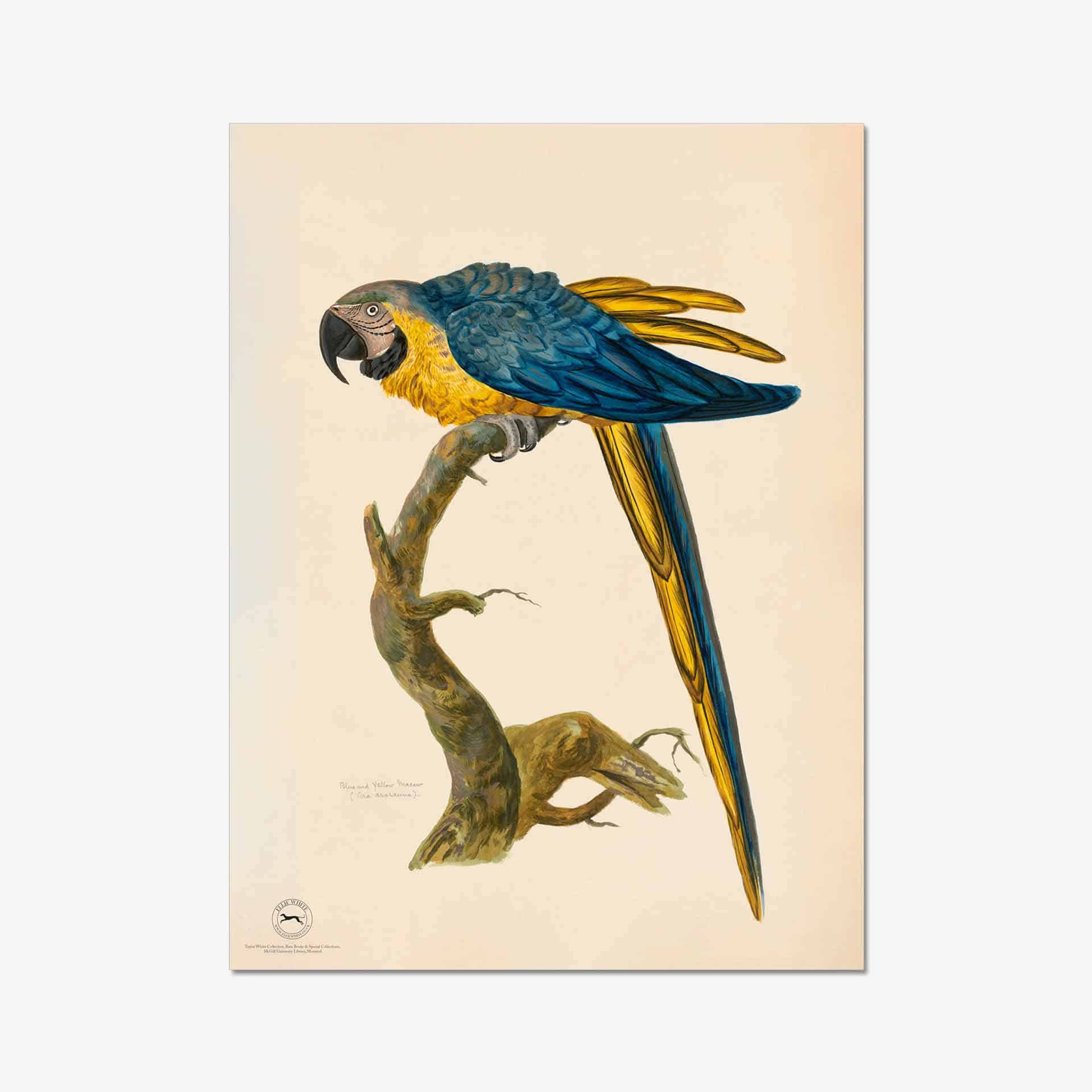
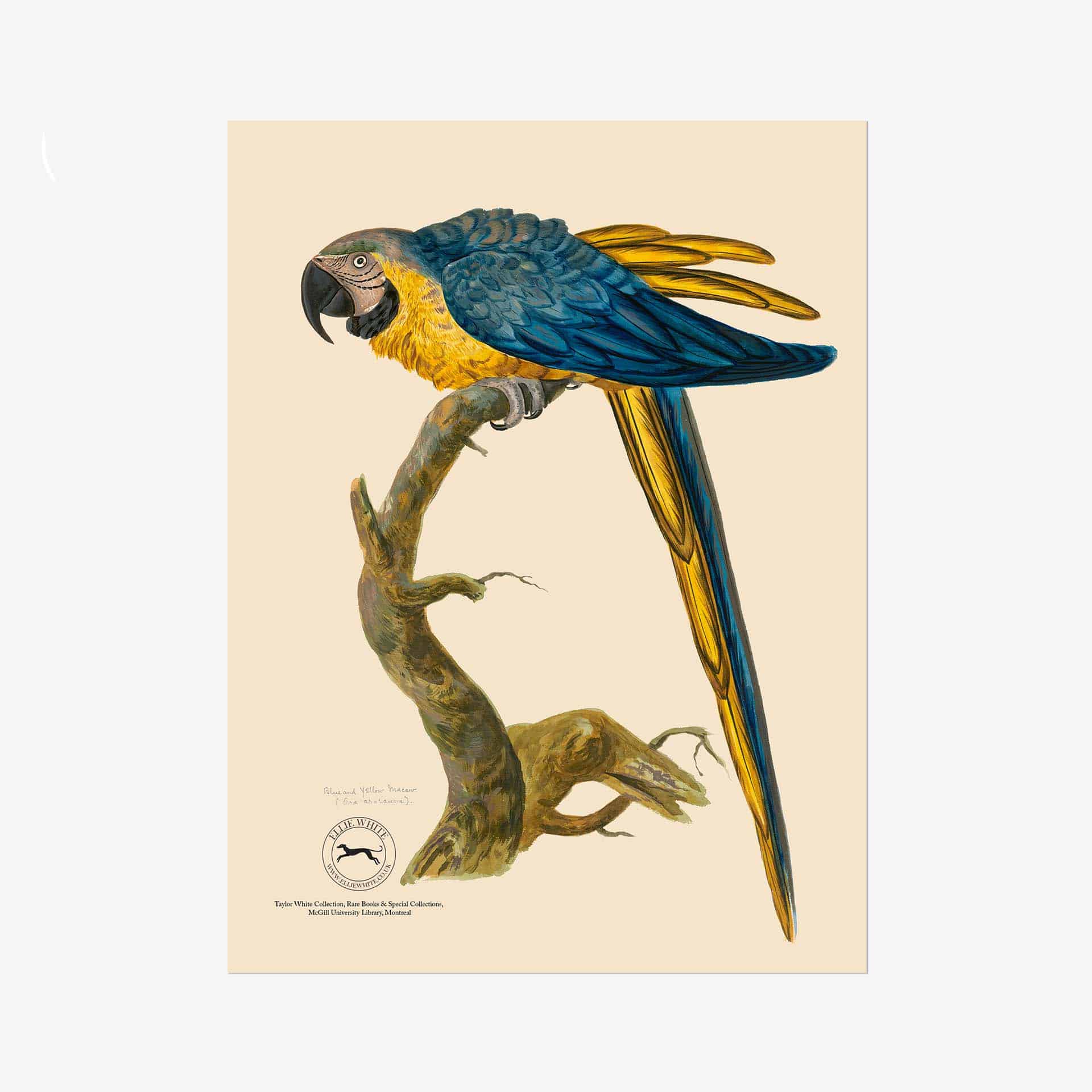
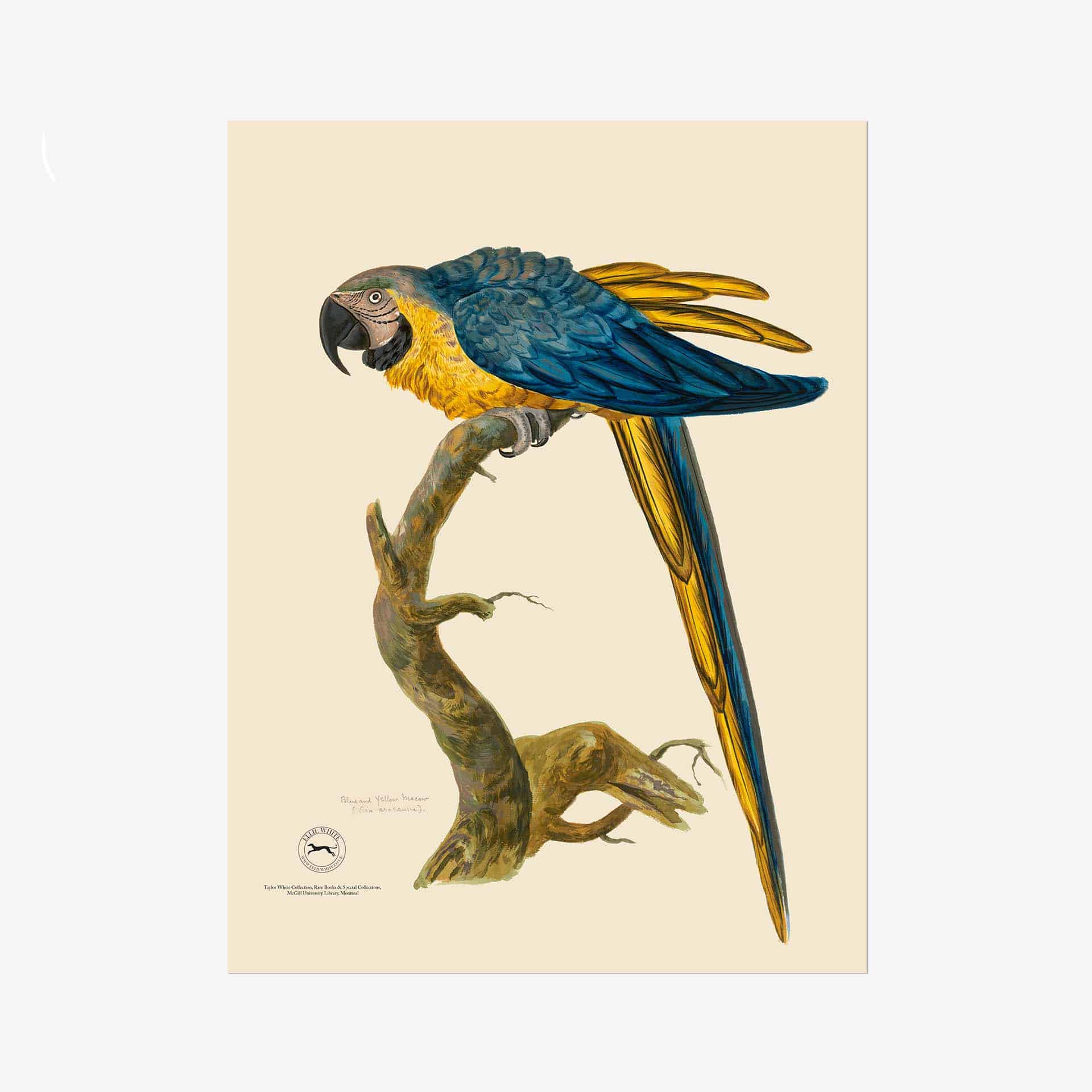
A high quality fine art print on Hahnemühle German Etching art paper of a Blue & Yellow Macaw in a tree, painted by wildlife painter Peter Paillou (c.1720-c.1790).
Superb Blue & Yellow Macaw Fine Art Print on Museum-Quality Paper
We've meticulously reproduced Blue & Yellow Macaw Fine Art Print on museum-quality fine art paper, matched to size. The 6in x 8in print is produced on Enhanced Matte Art Paper [EMA], a heavy-duty fine art paper with a smooth, non-reflective finish. The 12in x 16in and 18in x 24in prints are produced on 310gsm Hahnemühle German Etching paper [HGE], an acid and lignin-free archival paper with a fine tooth, offering our highest level of detail and longevity.
Both papers are fade-resistant and colourfast, using pigment inks designed to preserve the clarity and depth of the original artwork for decades. Every print is produced to order from a high-resolution master file, ensuring sharp detail and accurate colour reproduction.
* Please note that images of Blue & Yellow Macaw Fine Art Print on our website are lower resolution copies of the originals, for illustrative purposes only. The actual print uses high-resolution source imagery to ensure a crisp, clear, and visually stunning final result.
The Taylor White Collection's 18th Century Watercolour Painting of the Blue & Yellow Macaw
Our Blue & Yellow Macaw comes from the original collection of Taylor White F.R.S. (1701-1772). In the mid-18th Century, White commissioned the celebrated wildlife painter Peter Paillou (c.1720 - c.1790) to paint a number of specimens for his collection. The watercolour of the Blue & Yellow Macaw was among the works Paillou produced for White.
The original Blue & Yellow Macaw watercolour is finely painted, with remarkable detail, allowing the plumage and features of the Blue & Yellow Macaw to be seen in stunning clarity. This depth of colour and detail has been captured brilliantly through the digitisation process and is replicated here for your home or office decor, or as a thoughtful gift.
Taylor White, a barrister by profession and later Puisne Judge for Chester, was a keen naturalist and Fellow of the Royal Society, elected in 1725. Over nearly forty years from the 1730s until his death in 1772, he commissioned 938 watercolours of birds, mammals, fish and reptiles, including the Blue & Yellow Macaw, now held at McGill University and painted almost entirely by two artists, Charles Collins and Peter Paillou. White was a founding governor of The Foundling Hospital in London and served as its treasurer for the last twenty-five years of his life. His well-connected social and scientific circle gave his artists exceptional access to specimens: his second wife, Frances Armstrong, was the daughter of General John Armstrong, Governor of the Tower of London and Chief Royal Engineer, and White's artists painted the lions, wolves and other animals of the Royal Menagerie there. He also borrowed specimens from the British Museum, and received rare and exotic birds from friends, including the naturalist Joseph Banks, who sailed to Newfoundland in 1766, and William Harrison, who brought back specimens from voyages testing his father's marine chronometer.
The Blue & Yellow Macaw
The Blue-and-yellow Macaw (Ara ararauna) is one of the most instantly recognisable parrots of the South American tropics, its plumage a striking contrast of cobalt-blue wings and back against a rich golden-yellow breast. Native to the forests and wetlands of the Amazon basin, from Panama down through Brazil, Bolivia and Paraguay, the species has long drawn the attention of naturalists and artists alike, its bold colouring and expressive character making it a natural subject for wildlife illustration.
This watercolour forms part of the Taylor White Collection, a body of 18th-century natural history studies noted for their close observation and delicate handling of colour. The artist has captured the macaw with particular attention to the layered texture of its feathers and the pale, bare facial skin marked with fine lines, a detail characteristic of the species and one that required a practised hand to render convincingly in watercolour.
Macaws such as this held a particular fascination for 18th-century naturalists, arriving in Europe via trade routes from the New World and offering a rare glimpse of tropical colour to audiences who would otherwise never encounter such a bird. Works like this one sit within a wider tradition of natural history illustration that valued scientific accuracy alongside artistic skill, predating photography as the primary means of recording the natural world.
This Giclée print reproduces the original 18th-century watercolour with museum-quality accuracy, preserving the subtlety of its colour and linework. It is available as a fine art print and across a range of homeware, including mugs, coasters, greetings cards, and journals, as part of the Taylor White Collection at Ellie White.
Reviews
There are no reviews yet.