

Wood Pigeon Fine Art Print
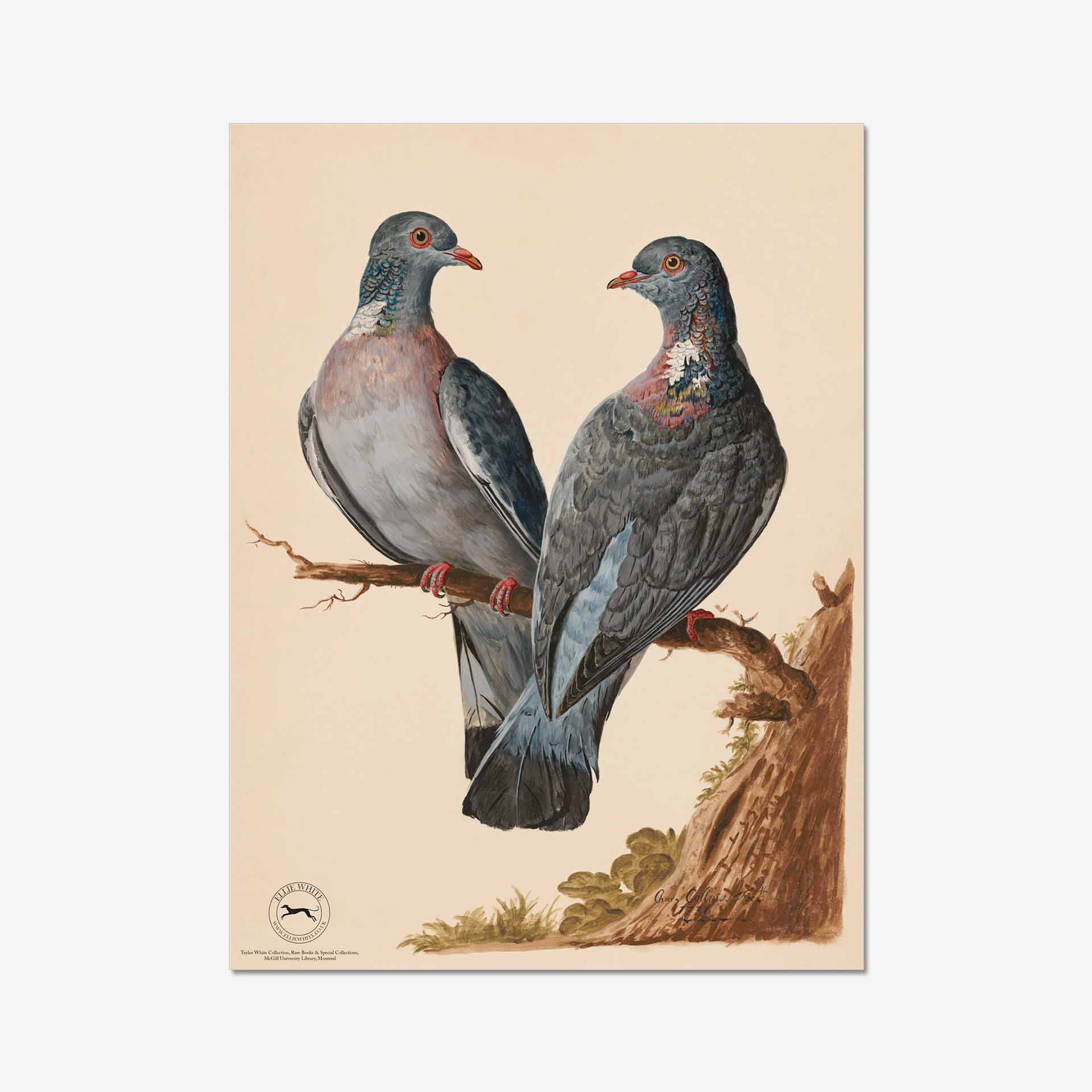
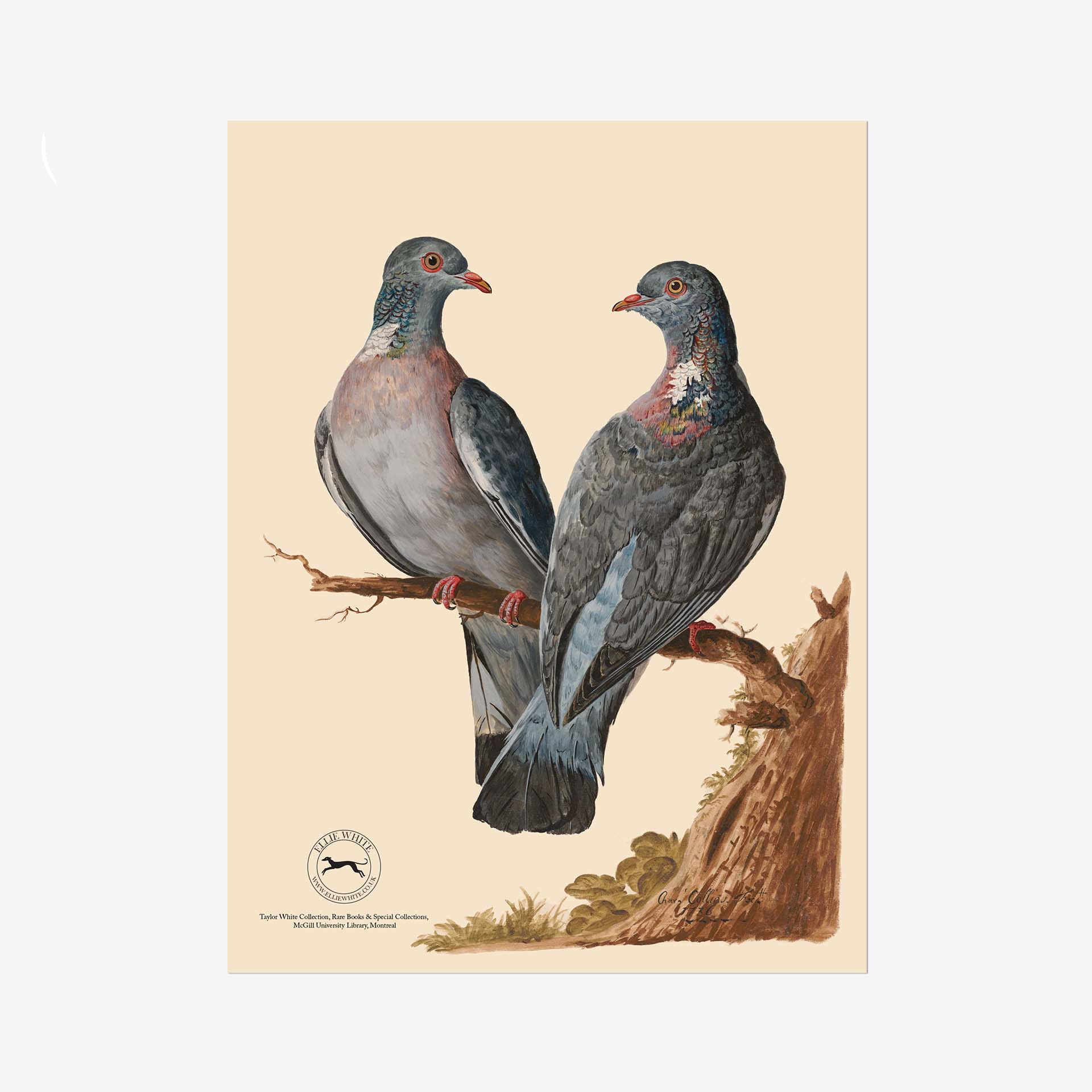
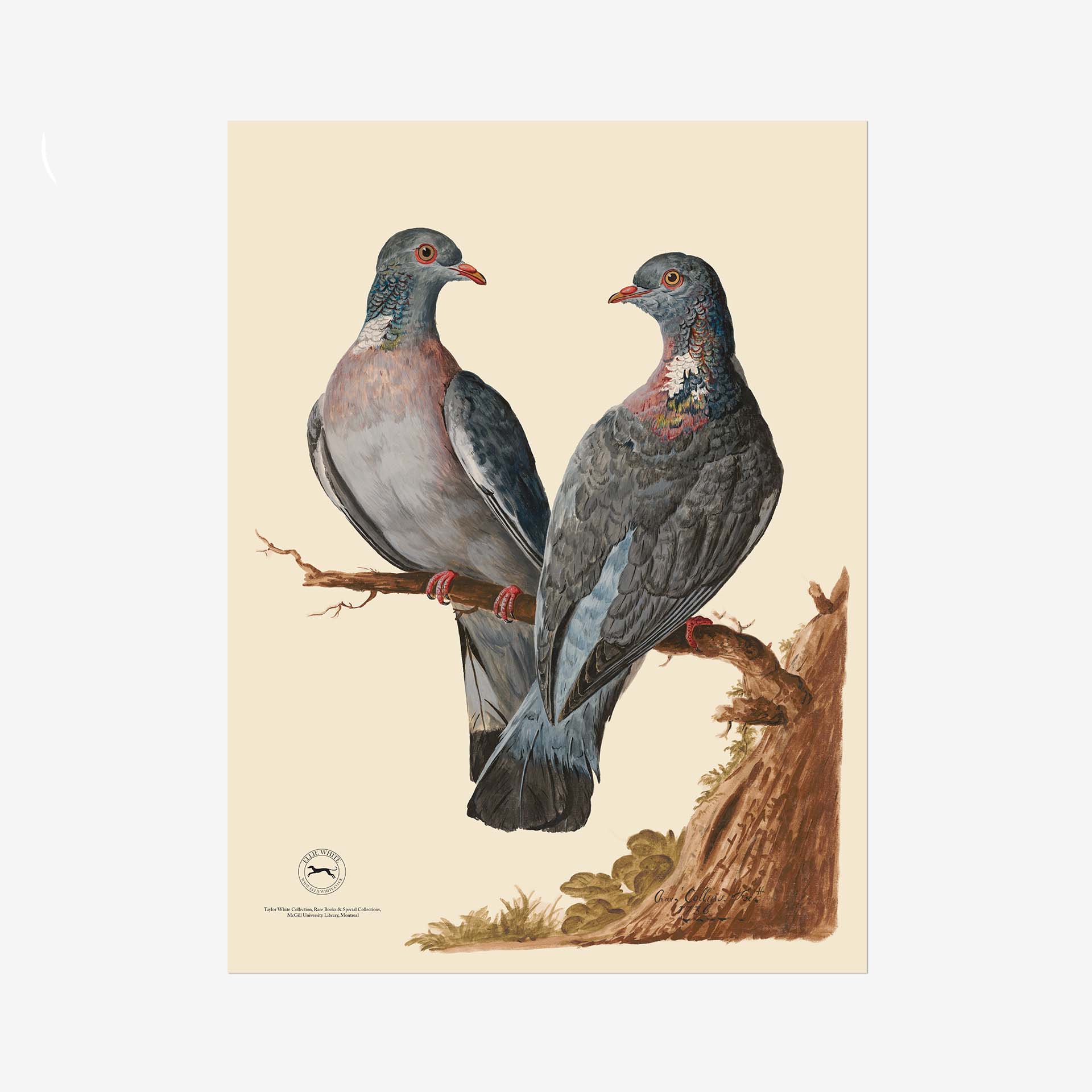
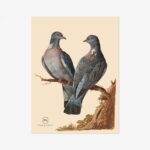
A high-quality fine art print of a pair of Wood Pigeon in a tree; printed on Hahnemühle German Etching art paper. The original watercolour painting was painted by wildlife painter Charles Collins (c.1680-1744) in 1736.
Superb Wood Pigeon Fine Art Print on Museum-Quality Paper
We've meticulously reproduced Wood Pigeon Fine Art Print on museum-quality fine art paper, matched to size. The 6in x 8in print is produced on Enhanced Matte Art Paper [EMA], a heavy-duty fine art paper with a smooth, non-reflective finish. The 12in x 16in and 18in x 24in prints are produced on 310gsm Hahnemühle German Etching paper [HGE], an acid and lignin-free archival paper with a fine tooth, offering our highest level of detail and longevity.
Both papers are fade-resistant and colourfast, using pigment inks designed to preserve the clarity and depth of the original artwork for decades. Every print is produced to order from a high-resolution master file, ensuring sharp detail and accurate colour reproduction.
* Please note that images of Wood Pigeon Fine Art Print on our website are lower resolution copies of the originals, for illustrative purposes only. The actual print uses high-resolution source imagery to ensure a crisp, clear, and visually stunning final result.
The Taylor White Collection's 18th Century Watercolour Painting of the Wood Pigeon
Our Wood Pigeon comes from the original collection of Taylor White F.R.S. (1701-1772). In the mid-18th Century, White commissioned the celebrated wildlife painter Charles Collins (c.1680 - 1744) to paint a number of specimens for his collection. The watercolour of the Wood Pigeon was among the works Collins produced for White.
The original Wood Pigeon watercolour is finely painted, with remarkable detail, allowing the plumage and features of the Wood Pigeon to be seen in stunning clarity. This depth of colour and detail has been captured brilliantly through the digitisation process and is replicated here for your home or office decor, or as a thoughtful gift.
Taylor White, a barrister by profession and later Puisne Judge for Chester, was a keen naturalist and Fellow of the Royal Society, elected in 1725. Over nearly forty years from the 1730s until his death in 1772, he commissioned 938 watercolours of birds, mammals, fish and reptiles, including the Wood Pigeon, now held at McGill University and painted almost entirely by two artists, Charles Collins and Peter Paillou. White was a founding governor of The Foundling Hospital in London and served as its treasurer for the last twenty-five years of his life. His well-connected social and scientific circle gave his artists exceptional access to specimens: his second wife, Frances Armstrong, was the daughter of General John Armstrong, Governor of the Tower of London and Chief Royal Engineer, and White's artists painted the lions, wolves and other animals of the Royal Menagerie there. He also borrowed specimens from the British Museum, and received rare and exotic birds from friends, including the naturalist Joseph Banks, who sailed to Newfoundland in 1766, and William Harrison, who brought back specimens from voyages testing his father's marine chronometer.
The Wood Pigeon
This 18th Century watercolour of the Wood Pigeon (Columba palumbus) was painted by Charles Collins in 1736 and forms part of the Taylor White Collection, a body of natural history illustrations produced for the British naturalist Taylor White and now held by McGill University Library. Collins was among the leading natural history artists of his day, and his watercolours for White are prized for their precision and restraint, qualities well suited to the study of native British species.
The Range and Description of the Wood Pigeon
The Wood Pigeon is among the most familiar birds of the British countryside, its range extending across much of Europe and western Asia. Collins’s watercolour captures the bird’s soft grey plumage, warmed by a pink flush across the breast, alongside the white neck patch and white wing bar that distinguish it from other native pigeons. The pale eye, rendered with characteristic precision, reflects the careful, close observation found throughout the Taylor White Collection, in which birds are typically shown at rest, allowing their plumage and markings to be studied in detail rather than depicted in flight or action.
In life, the Wood Pigeon is a familiar sight in gardens, farmland, parkland and woodland, and is easily recognised by its deep, rhythmic cooing call, often rendered as five soft notes repeated in sequence. Outside the breeding season, the species is notably gregarious, gathering in large flocks to feed on open ground, a habit that has long shaped its relationship with arable farming. Wood Pigeons feed chiefly on leafy crops, grain, peas and berries, along with acorns, seeds and occasional invertebrates, and their appetite for cultivated crops made them a familiar target for gamekeepers and farmers throughout the 18th Century and beyond, much as they remain today.
Wood Pigeon Breeding Habits
Nests are simple platforms of interwoven twigs, built in trees or dense hedgerows, and pairs may raise several broods across a single breeding season. Eggs are incubated for around seventeen days before fledging follows some four to five weeks later.
Despite its ubiquity today, the Wood Pigeon held a rather different place in the natural history of Taylor White’s era. Far less urbanised than the closely related Feral Pigeon, it was regarded chiefly as a woodland and farmland species, and its inclusion in the Taylor White Collection reflects the broader ambition of 18th Century naturalists to document Britain’s native birds systematically, often for the first time in careful, life-sized colour. Alongside works such as Collins’s other bird studies for White, this watercolour offers a rare survival from a formative period in British ornithological illustration, when close observation of familiar species was beginning to be valued as seriously as the recording of the exotic and unfamiliar.
Reviews
There are no reviews yet